Big Eye Rip Fence System Troubleshooting: No Movement in Rear Clamping Mechanism When Lock Handle is Used

Created by Gabriel Izzo, Modified on Thu, 21 May at 11:45 AM by Gabriel Izzo

Big Eye Rip Fence System · Troubleshooting
No Movement in Rear Clamping Mechanism When Lock Handle is Used
Applicable Models
Big Eye B-36 / B-52 Rip Fence System
Safety — Read Before Beginning
+
Unplug the table saw from the power source before removing the fence, accessing any internal components, or performing adjustments to the clamping mechanism. Never work on the fence system while the saw is connected to power.
+
Wear safety glasses when loosening or tightening set screws and hardware — small components can dislodge unexpectedly.
+
Keep all small parts organized when disassembling the outer shell — screws, washers, and set screws are easy to misplace and must be reinstalled in the correct order.
+
Test the clamping mechanism fully before reconnecting power — confirm the lock handle engages and disengages smoothly and the fence locks securely on the rear rail before resuming operation.
Before You Begin — Pre-Check

Verify that if your table width requires the installation of the included Rod Sleeve onto the Lock Rod, it is correctly installed and the rear clamping mechanism has been adjusted for the table width before proceeding.

If you have a Harvey Alpha Series table saw, the Rod Sleeve is not used — the main table width is already 800 mm.

 Big Eye Rip Fence System Manual  

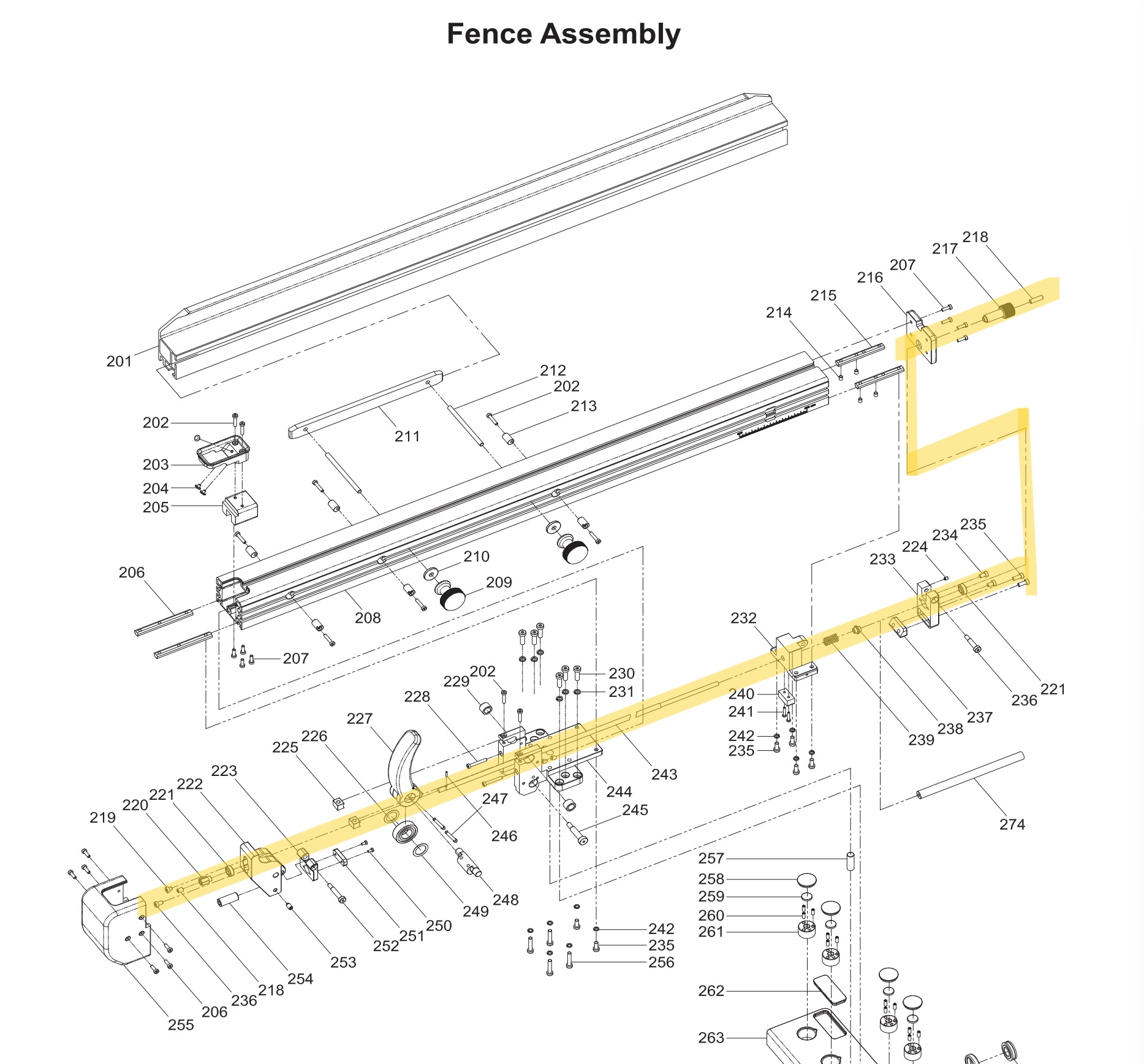
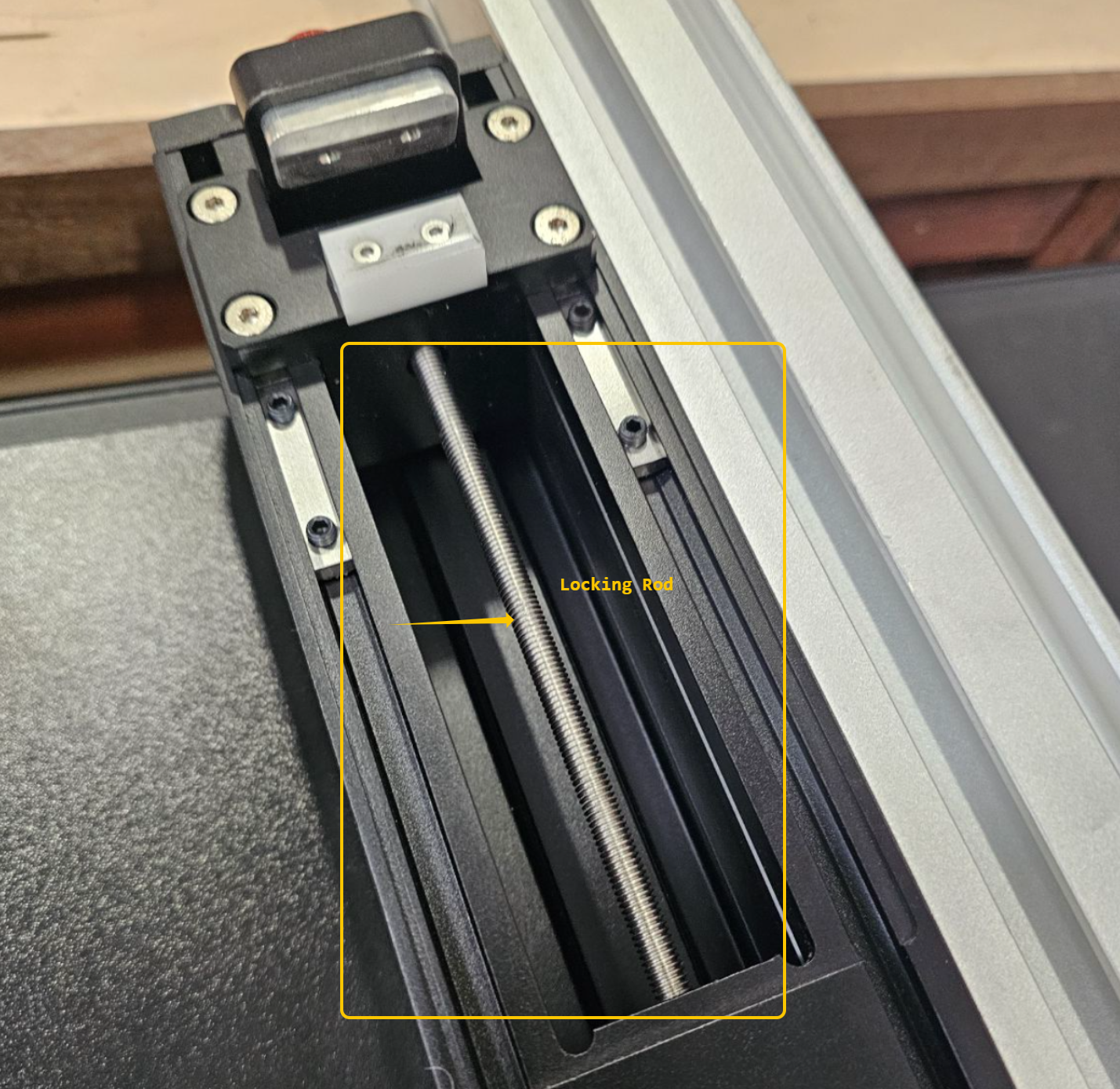
If moving the Fence Lock Handle up and down produces no visible movement in the rear clamping mechanism, remove the fence from the rails and turn it over to expose the underside where Part #243 — Locking Rod is visible.

While moving the lock handle, watch for movement in the Locking Rod. If there is no movement at all, grab the rod by hand and check for excessive play — this indicates the rod may be separated internally at the front or rear connection point.

Part #243 — Locking Rod Location (Underside of Fence)
Part 243 locking rod location underside of fence
Locking Rod — Separation Check
Checking locking rod for separation or excessive play
If the Rod Is Disconnected at the Front
Reconnecting the Lock Rod

If the rod is disconnected from the front clamping mechanism, the front outer shell must be removed to access Part #218 Set Screw. Loosen it and verify that Part #220 Pull Rod Lock Nut is secured to the Lock Rod before fully tightening.

1
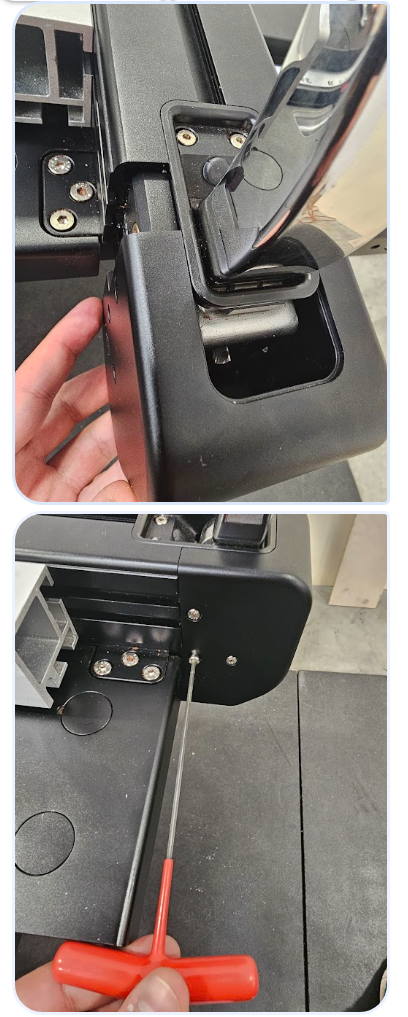
Remove the Six Outer Shell Screws

Remove the six screws that secure the outer shell to expose the internal clamping assembly.

Step 1 — Removing Outer Shell Screws
Removing six outer shell screws from fence body
2
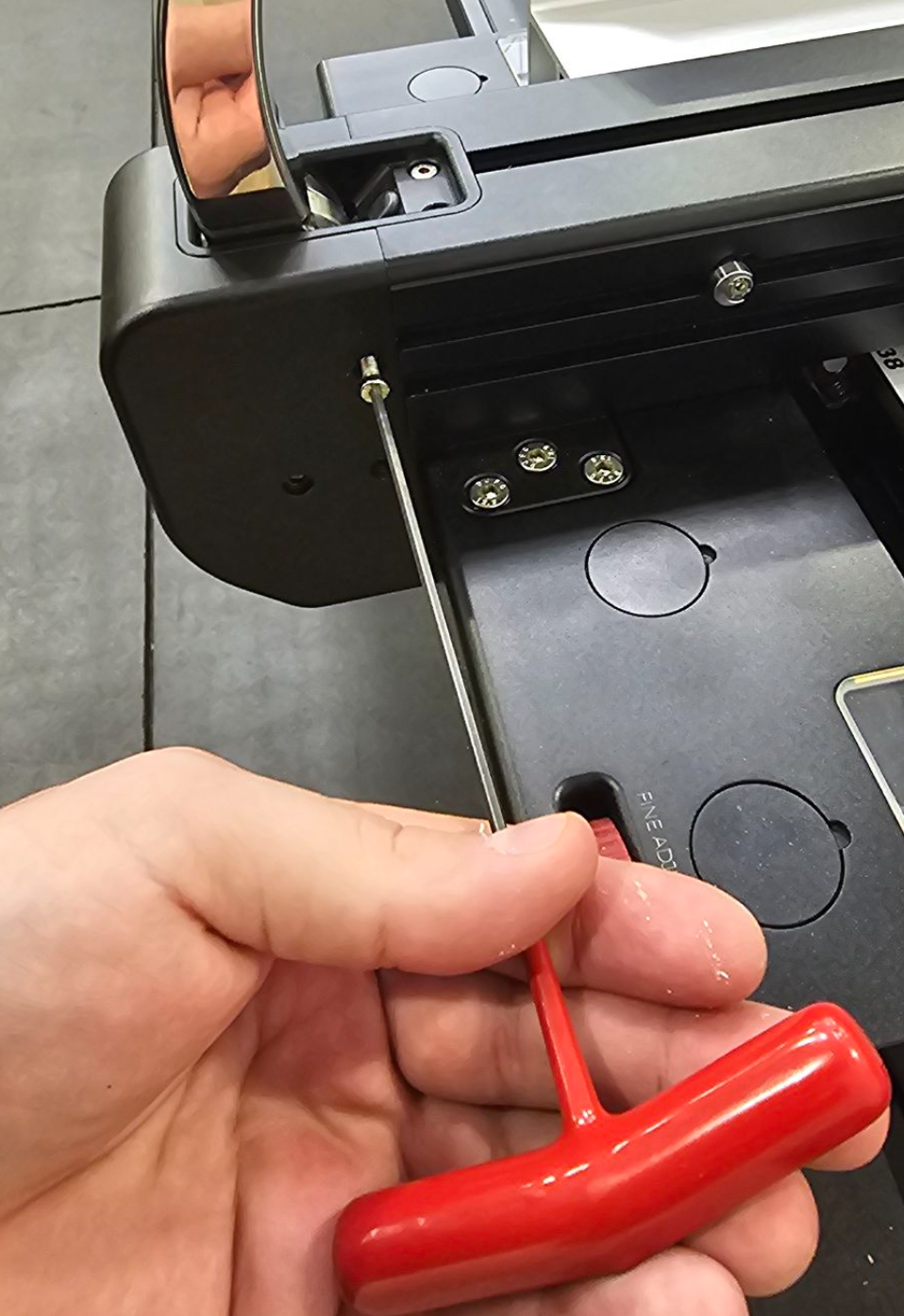
Loosen the Set Screw (Part #218)

Loosen the set screw on the end of the Pull Rod Lock Nut (Part #218).

Step 2 — Loosening Set Screw on Pull Rod Lock Nut
Loosening set screw on pull rod lock nut
3
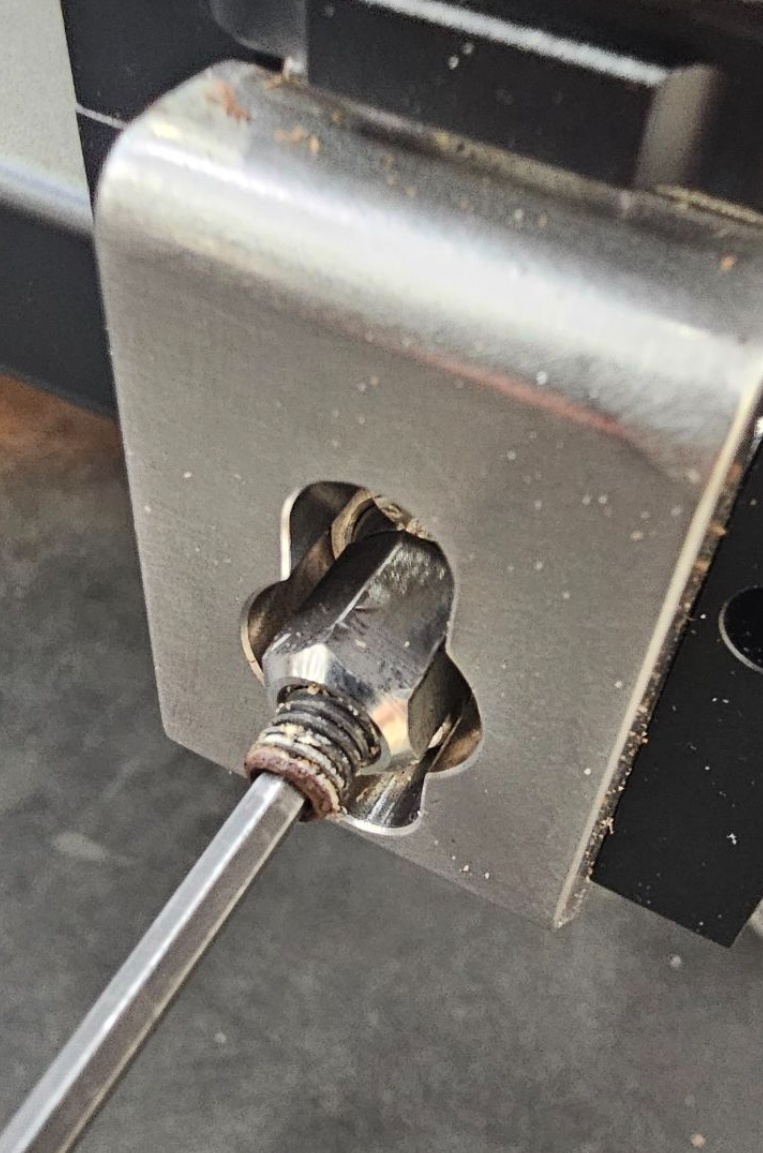
Reseat the Lock Rod and Thread on the Lock Nut

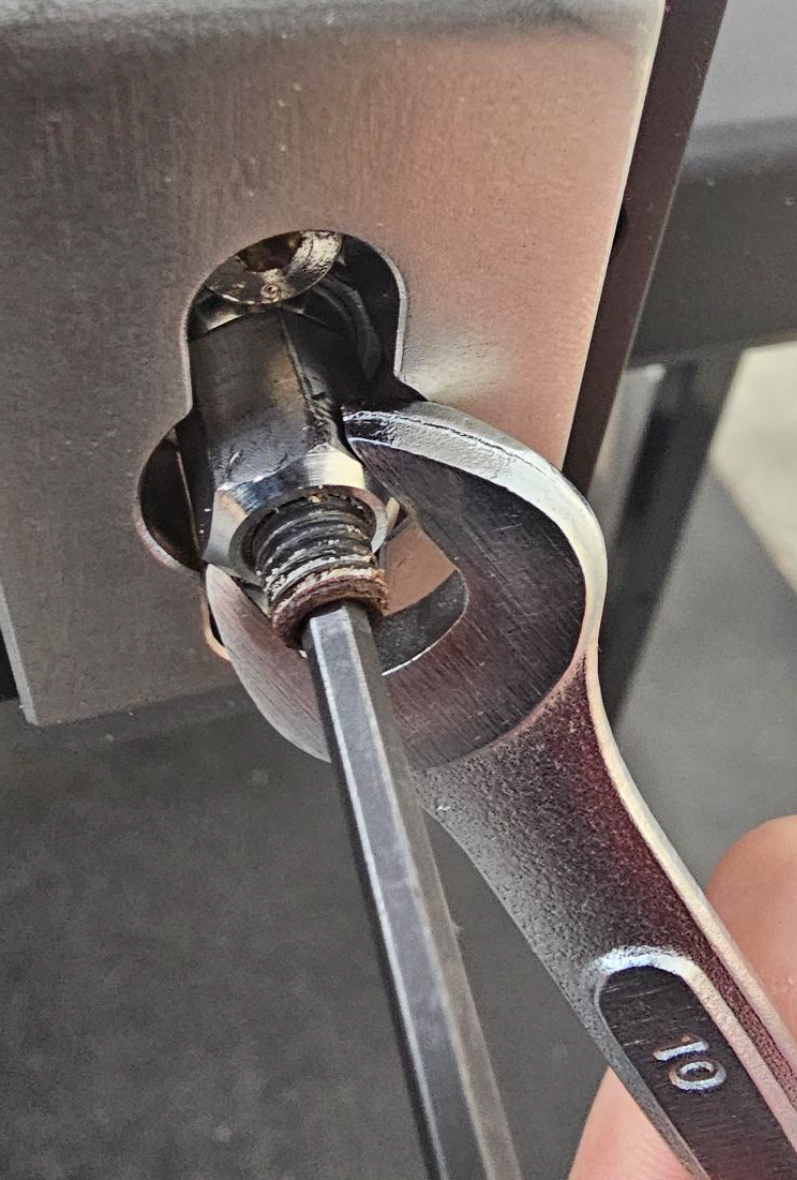
If the Pull Rod Lock Nut is not connected to the rod, reseat the lock rod into position and thread the nut onto the end of the rod using a 10 mm open-end or socket wrench.

Step 3 — Threading Lock Nut onto Lock Rod
Threading pull rod lock nut onto lock rod
Tighten the Set Screw and Reinstall the Outer Shell

Once the lock nut is reconnected to the lock rod, tighten the set screw to secure it in place, then reinstall the outer shell with the six screws.

Step 4 — Set Screw Tightened, Shell Reinstalled
Set screw tightened and outer shell reinstalled
Once reassembled, test the lock handle — it should now engage the rear clamping mechanism smoothly. If the issue persists, please contact our support team.
i

If the clamping mechanism still does not engage after following these steps, please contact our support team.

Was this article helpful?

That’s Great!

Thank you for your feedback

Sorry! We couldn't be helpful

Thank you for your feedback

Let us know how can we improve this article!

Select at least one of the reasons
CAPTCHA verification is required.

Feedback sent

We appreciate your effort and will try to fix the article