Alpha HW615 Bandsaw: Bandsaw Shipping and Moving Guidelines

Created by Gabriel Izzo, Modified on Tue, 23 Jun at 10:48 AM by Gabriel Izzo

Harvey Industries · Alpha HW615 Band Saw · Shipping & Moving
Shipping & Moving Guidelines
⚠ Important — Liability Disclaimer

The guidelines in this article are provided to help users safely transport the Alpha HW615 band saw. By proceeding with transport, the user assumes full responsibility for the safe and proper securing, loading, and movement of the machine.

Harvey Industries International, Inc. is not liable for any damage to the machine that occurs during user-arranged transport, including damage caused by improper securing, incorrect orientation, or load shifting.
Machine warranties may be voided if the machine is damaged due to user error during transport, including but not limited to placing the machine on the motor side, using insufficient strapping, or failing to properly secure the load.
Harvey Industries International, Inc. is not liable for any injuries to users or others resulting from improper transport, unsecured loads, tipping, or any other transport-related incident caused by failure to follow these guidelines.

If you are unsure about any aspect of transporting this machine safely, contact Harvey support before attempting to move it.

Machine Weight Reference
Net weight: 441 lbs
Packaged weight: 485 lbs
Min. recommended strap rating: 1,500–2,000 lbs WLL per strap
⚠ Safety Considerations — Moving Heavy Machinery
Use appropriate mechanical lifting equipment — pallet jack, forklift, or hand truck rated for the machine weight. Never attempt to manually lift or carry a machine of this weight.
!
Keep all bystanders clear of the machine during moving operations. A tipping or shifting machine can cause serious or fatal injury. Establish a clear zone and ensure no one stands in the path of potential movement.
!
Never move the machine on a slope or uneven surface without a plan for controlling the load. A heavy machine can shift unexpectedly on inclines and is extremely difficult to stop once moving.
!
Wear steel-toed boots and work gloves when moving heavy machinery. Never place hands, feet, or any part of your body under or behind a machine being moved.
!
Secure the load before transport begins and inspect all straps after loading. Re-check strap tension after the first 15–20 minutes of travel as straps can loosen from initial vibration and settling.
Ratcheting Strap Guidelines
Proper securing methods and what to avoid
✓ Proper Securing Methods
Use ratcheting straps rated at 1,500–2,000 lbs Working Load Limit (WLL) or higher per strap, using a minimum of 2–4 straps across multiple directions.
Route straps around solid, structural points on the pallet and machine base — not over knobs, handles, covers, or fragile projections.
Use multiple straps in multiple directions — front-to-back and side-to-side — to prevent shifting in any direction.
Anchor straps to vehicle tie-down points rated for the load. Do not anchor to floor boards, wheel wells, or non-structural surfaces.
Keep all straps taut with no slack. Pull the ratchet handle fully until the strap is firm and cannot shift.
Use corner protectors or padding where straps contact painted or machined surfaces to prevent scratching or deformation.
✕ What to Avoid
Never use straps rated at or near the machine's static weight. Dynamic transit forces can apply 1.5–3× the static weight — a 485 lb machine can effectively exert 700–1,500+ lbs of force on straps during a hard stop or rough road.
Do not use worn, frayed, cut, or previously overloaded straps. Inspect all hardware — hooks, ratchets, webbing — before use and replace any damaged components.
Do not route straps over control knobs, handwheels, the motor housing, fan cover, blade guides, or any protruding component. These can be crushed or damaged under load.
Do not allow any slack in the strapping. Even small amounts of slack allow the machine to build momentum during a shift, dramatically increasing the force it exerts on the straps.
Do not transport with fewer straps than needed or with straps running only in one direction. A single strap in one direction does not prevent all possible movement.
Why 1,500–2,000 lbs WLL Per Strap?
Dynamic load forces. During transit, braking, acceleration, and road shock can apply 1.5–3× the machine's static weight onto the straps. The HW615 weighs 485 lbs packaged — this means the straps may need to handle 700–1,500+ lbs of effective force during a hard stop or rough road, even before accounting for multiple simultaneous forces.
Angle loss. A strap running at an angle — rather than perfectly parallel to the load — loses effective holding power. A strap at 45° can lose 30% or more of its rated capacity. Straps rated well above the load compensate for this real-world loss.
Industry guidance. Professional load securement guidelines generally require the combined Working Load Limit of all tie-downs to equal at least the full cargo weight — and recommend significantly exceeding this to provide a meaningful safety margin. For a 485 lb machine using 2–4 straps, each strap should be rated at 1,500–2,000 lbs WLL to maintain an adequate combined capacity above the maximum possible dynamic load.
Hardware failure risk. Even when the webbing holds, under-rated straps can fail at the ratchet mechanism or the hooks under shock loading. Higher-rated straps use heavier-gauge hardware throughout, reducing the risk of failure at any point in the assembly.
Preferred Method — Transport Upright
✓ Always transport upright when possible

We strongly recommend transporting the Alpha HW615 in its upright position on a pallet whenever possible. Use a pallet jack or forklift to load and position the machine, then secure it to the vehicle's side walls and floor with ratcheting straps rated at 1,500–2,000 lbs WLL or higher, using a minimum of 2–4 straps.
Run straps from the vehicle's side walls down to and around the pallet base — front to back and side to side.
Ensure the machine cannot shift, tip, or topple in any direction before departing.
Inspect strap tension after 15–20 minutes of travel and retighten if any slack has developed.
If Laying Down is Unavoidable — Orientation Guide
Only lay the machine down if there is absolutely no option to transport it upright
Laying the machine down is not recommended and may increase the risk of internal damage. Only proceed if upright transport is truly not an option, and follow the orientation guide below precisely to minimize risk. Damage caused by incorrect orientation is not covered under warranty.
Spine Side — Preferred Orientation for Laying Down
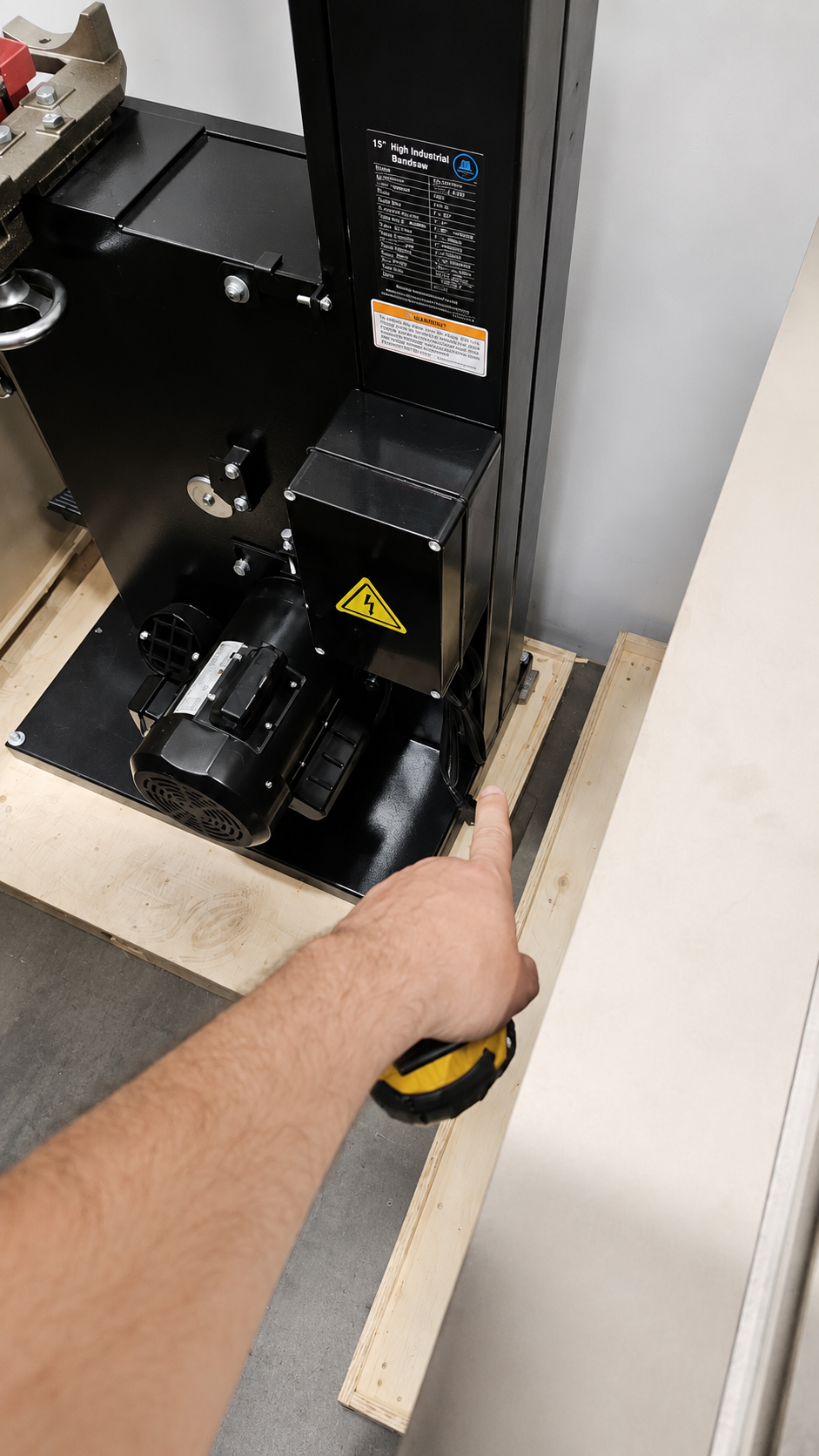
Spine side of the Alpha HW615 — the recommended side to lay the machine down on if required

Before laying the machine down, identify which side is which using one of the following methods. The machine is shipped in cardboard on a pallet, and the bolts securing the machine to the pallet are visible from the underside.

Identification Method 1 — Cardboard Inspection

Because the cardboard is secured to the pallet via plastic straps, it is best to leave the straps in place during transport. To identify the spine and motor sides, carefully cut a small hole in the cardboard siding — do not cut deeper than the cardboard itself. Use a flashlight to peer inside and perform a visual inspection. From there you can identify which side has the spine and which side has the motor, and orient accordingly.

Identification Method 2 — Pallet Bolt Measurement

The machine is bolted to the pallet and the bolt heads are visible from the underside of the pallet. By measuring the distance from the bolt heads to the outer edge of the pallet on each side, you can reliably identify which side is which without opening the packaging. Refer to the side reference guide below.

The pallet is rectangular. The narrower sides of the pallet correspond to the spine side and the brake pedal side. The longer sides correspond to the front of the machine and the motor side.
Pallet Bolt Distance — Side Reference Guide
Spine Side — Recommended (Narrow Side) ~2.5" from bolt to edge

This is the preferred side to lay the machine down on if transport upright is not possible. The bolt heads on the underside of the pallet will be approximately 2.5" from the outer edge of the narrow side of the pallet.
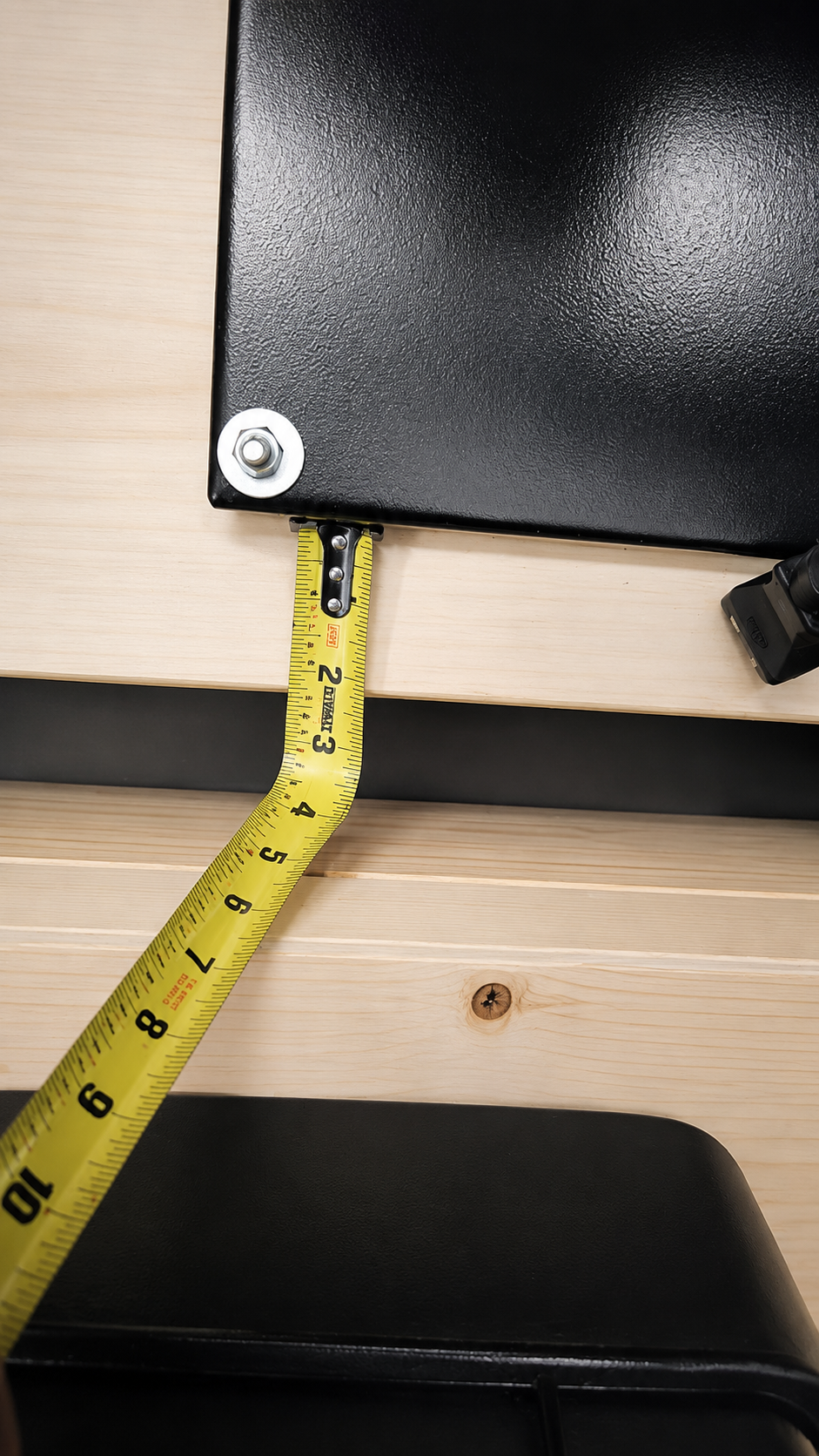
Spine Side — Bolt Distance Reference
Spine side bolt distance approximately 2.5 inches from outer edge of pallet
Front of Machine — Acceptable If Spine Side is Not Possible (Long Side) ~2" from bolt to edge

If the spine side cannot be positioned down, the front of the machine is the only other acceptable option. The bolt heads on the underside will be approximately 2" from the outer edge on the longer side of the pallet.
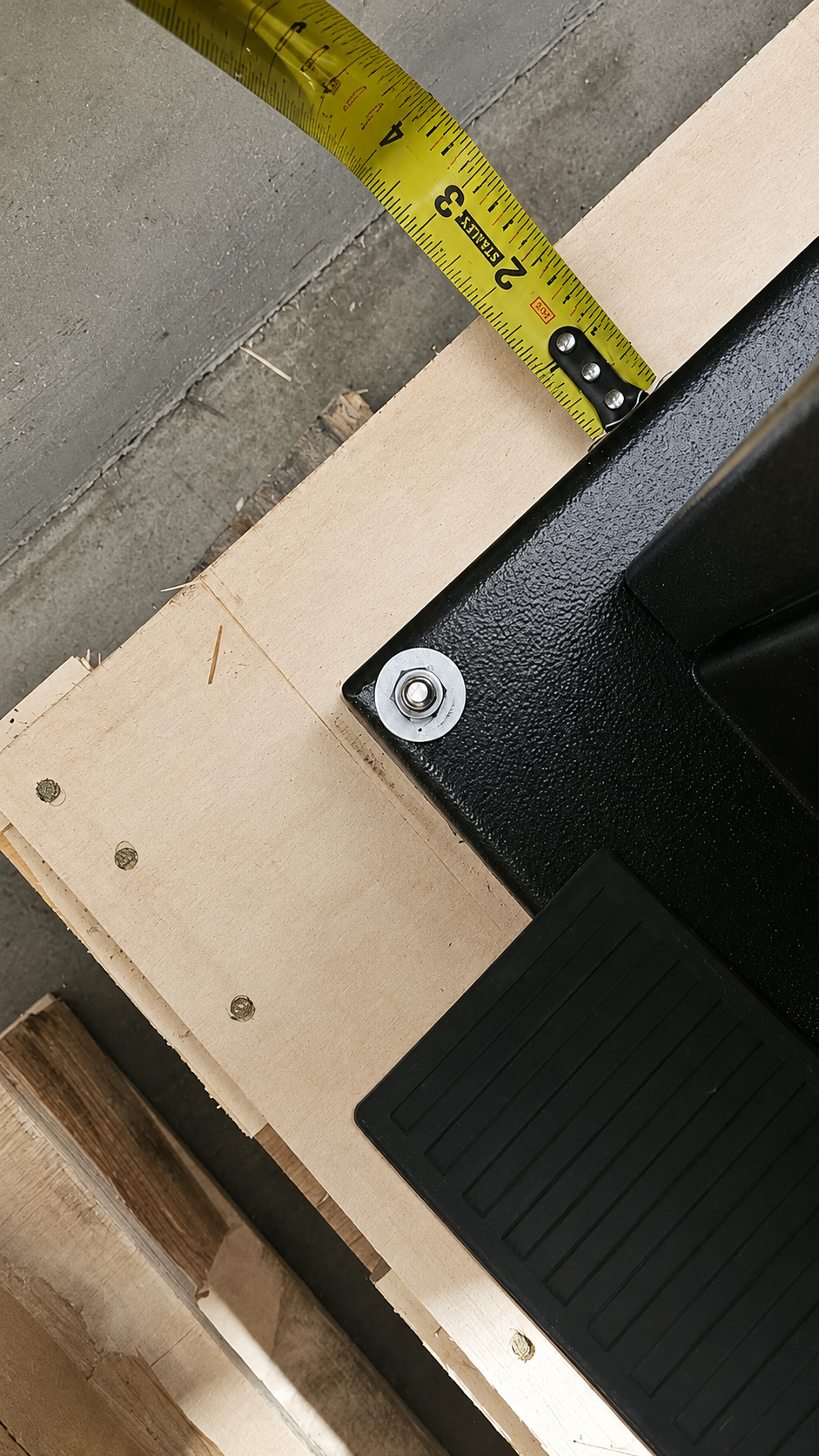
Front Side — Bolt Distance Reference
Front of machine bolt distance approximately 2 inches from outer edge on long side of pallet
Motor Side — NEVER lay the machine on this side (Long Side) ~6.5–7" from bolt to edge

Never lay the machine down on the motor side. This is the side with the largest distance between the bolt heads and the outer pallet edge — approximately 6.5–7". If the machine is placed on this side, the weight of the machine will crush the motor fan cover inward, potentially damaging the motor and voiding the motor warranty.
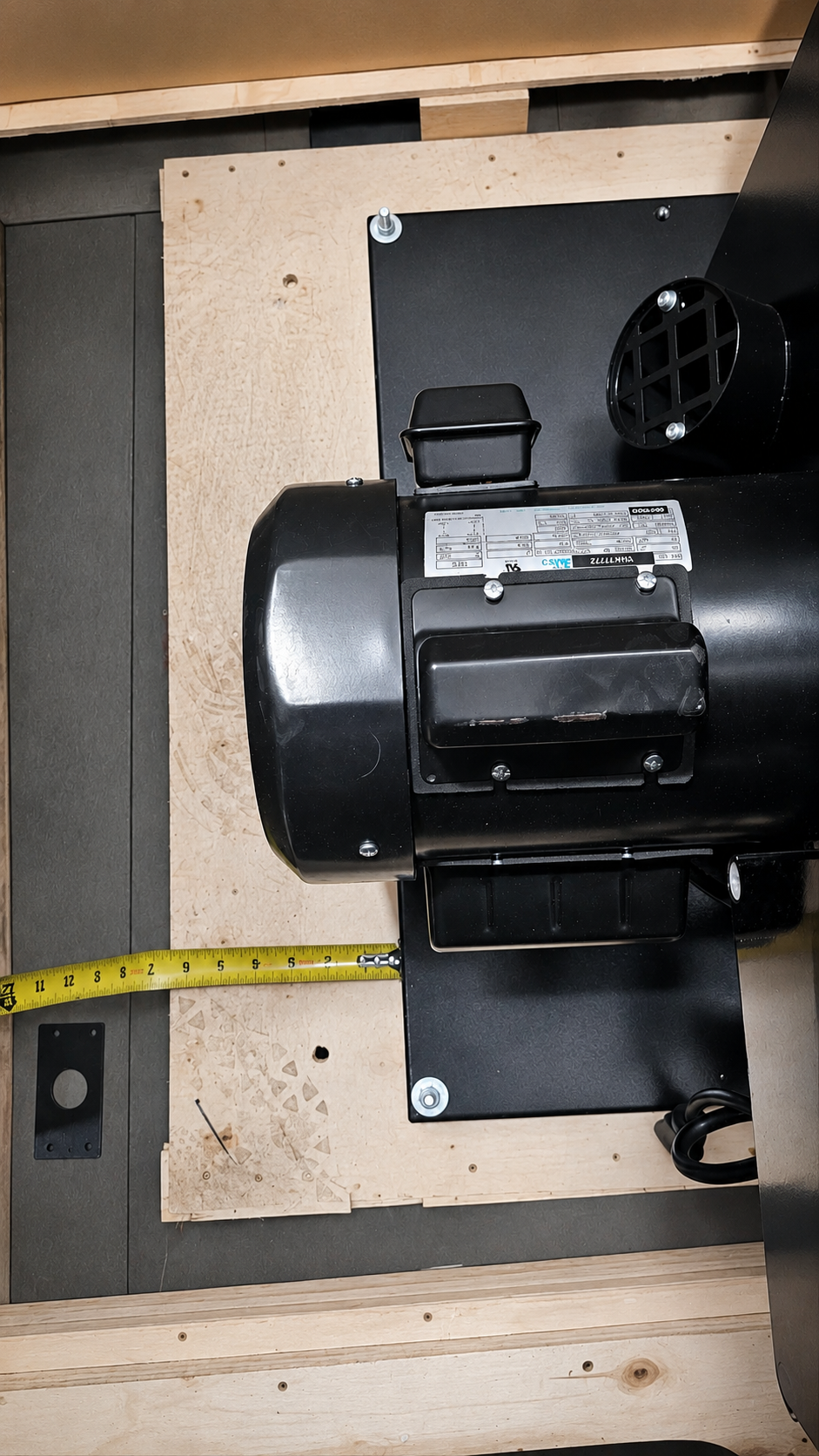
Motor Side — AVOID — Bolt Distance Reference
Motor side bolt distance approximately 6.5 to 7 inches from outer edge — do not lay on this side
Brake Pedal Side — Avoid (Narrow Side) ~4.5" from bolt to edge

Avoid laying the machine down on the brake pedal side. The bolt heads on this side will measure approximately 4.5" from the outer edge of the narrow side of the pallet. The weight of the machine resting on the brake pedal can damage brake components.
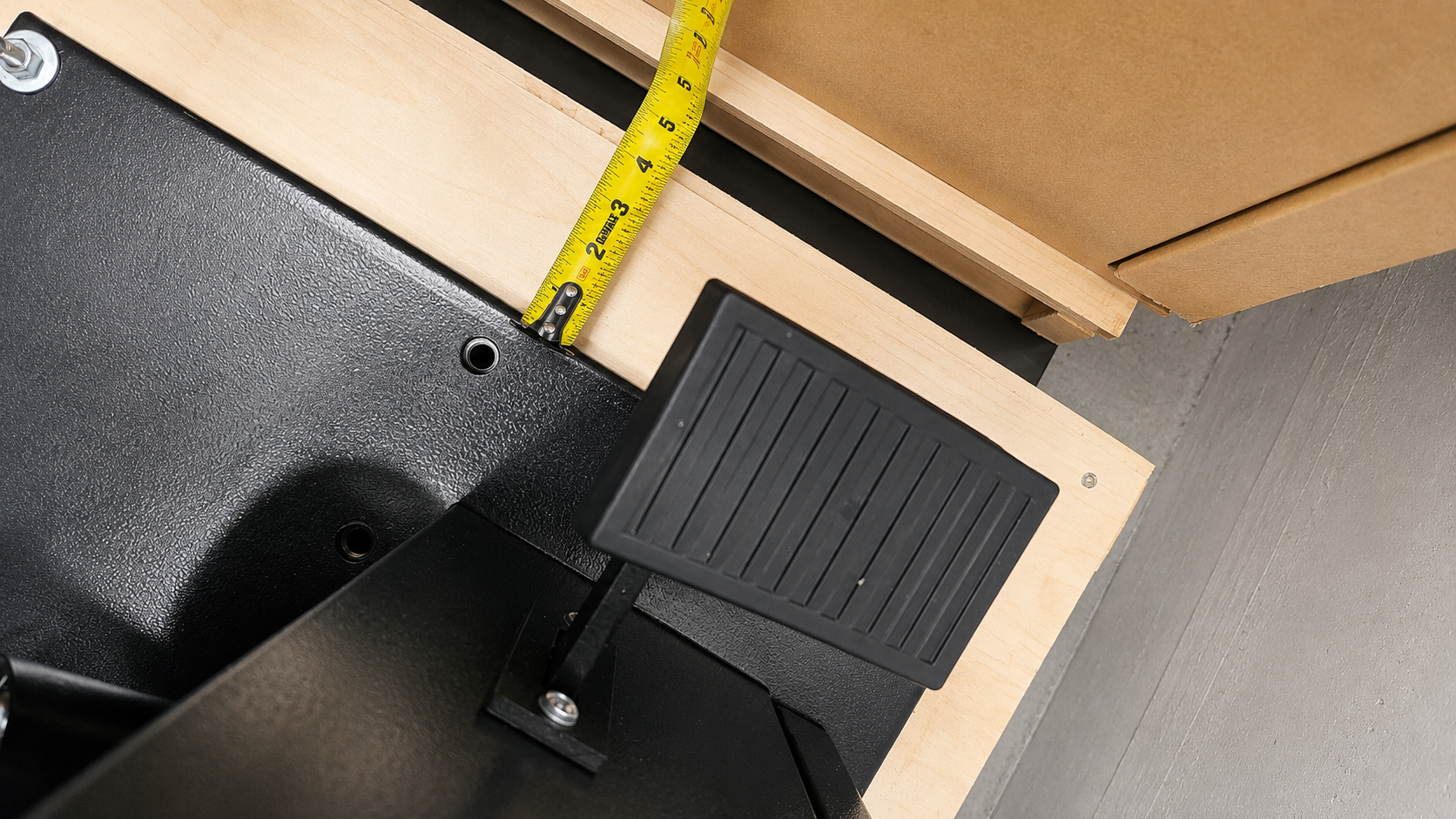
Brake Pedal Side — AVOID — Bolt Distance Reference
Brake pedal side bolt distance approximately 4.5 inches from outer edge — avoid laying on this side
Quick Reference Summary
SidePallet EdgeBolt DistanceStatus
SpineNarrow~2.5"✓ Recommended
FrontLong~2"✓ Acceptable
Brake PedalNarrow~4.5"✕ Avoid
MotorLong~6.5–7"✕ Never
i

If you have questions about safely transporting or moving the Alpha HW615, please contact our support team or call 888-211-0397 before attempting transport.

Was this article helpful?

That’s Great!

Thank you for your feedback

Sorry! We couldn't be helpful

Thank you for your feedback

Let us know how can we improve this article!

Select at least one of the reasons
CAPTCHA verification is required.

Feedback sent

We appreciate your effort and will try to fix the article